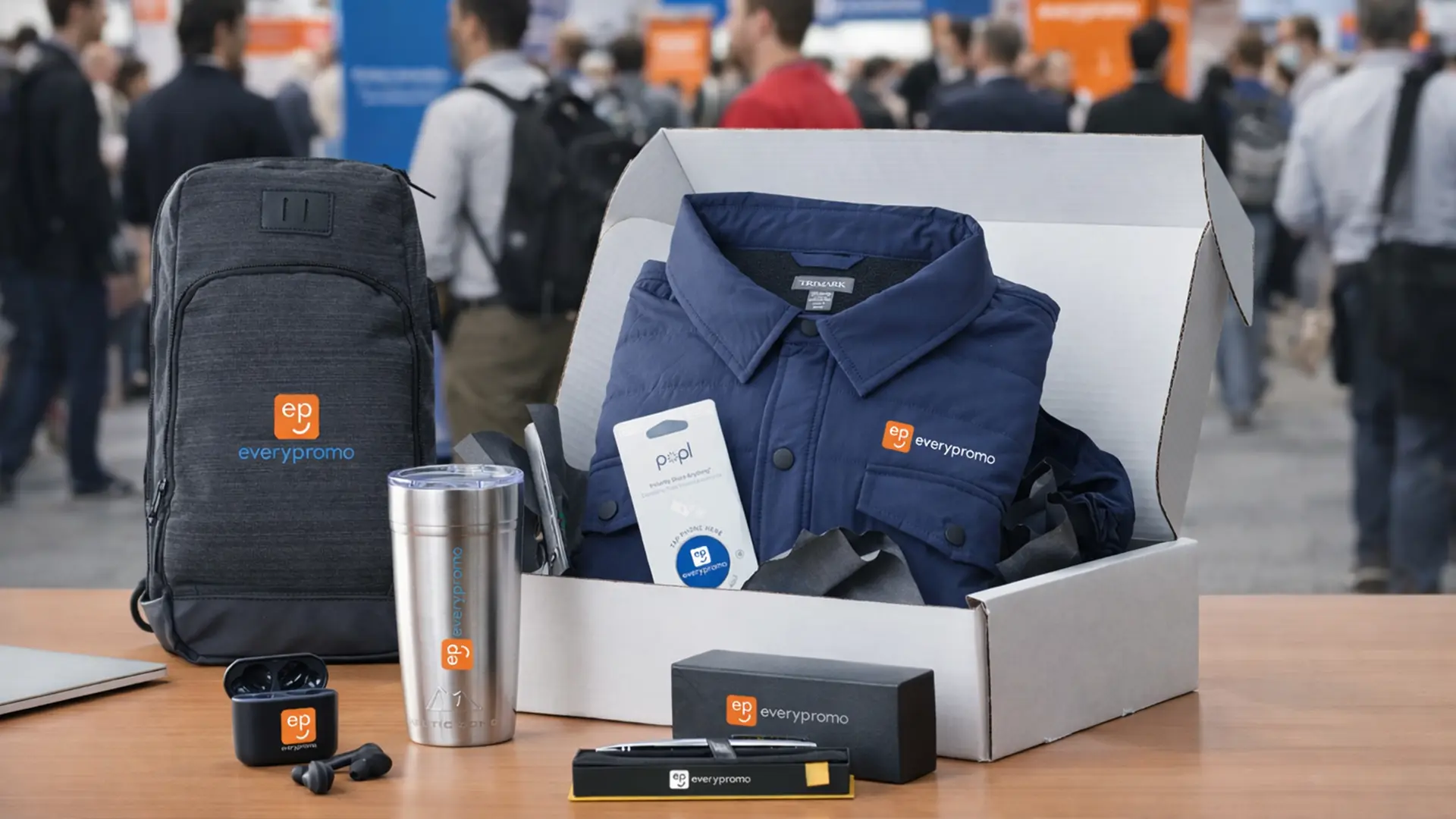
Businesses like giving away free money, right? No, yet it seems like that’s what most of them do when they go to tradeshows. Tradeshows are an opportunity for businesses to meet potential clients and build relationships. They spend a lot of time and money setting up their booth and attending these events in order to grow their brand. One of the most important items they take with them is promotional products, yet they don’t take full advantage of them.
Key Takeaways
Promotional products are a valuable part of trade show marketing, but only when they are used with purpose. Trade shows are not just about being seen. They are about being remembered.
Businesses should remember:
- Giving away products without interaction limits their impact
- Useful and relevant items create stronger impressions
- Experiences make products more memorable
- Strategic distribution leads to better results
The Most Common Mistake Businesses Make
At tradeshows, most businesses display their items on their table and let anyone swing by to take them. Sometimes, the people working the booths don’t even say as much as a “hi”. Since all items are branded with the company’s logo, many companies call it marketing. Most items, if functional, will be used, and your logo will be present.
But what happens when a person leaves the tradeshow with 10-15 pens or tote bags? How likely is your logo to be visible and have a positive impression on that person? That marketing turns out to be not so effective, but not because of the promotional products, but rather because they are not being used as effectively as they could be.
Instead of giving away these items just cause, you might as well make the most of them and try to maximize your return on this expense. The idea is to make your booth an experience not just a quick free item pickup. In order to maximize your promotional products to generate more leads, consider the following.
Use Products as a Reward for Engagement
Instead of giving items away freely, you can use them as a reward or incentive. For example, a company might offer a branded item after someone:
- Plays an interactive game or demo.
- Watch a short demo
- Signs up for a newsletter or enters a giveaway.
Of course, the item you’re giving out needs to be worthwhile. People won’t bother to do this for a pen, but may be more willing for a tumbler. This approach ensures that each product is tied to an actual connection and makes your business a bit more memorable.
Choose Products That Are Useful and Relevant
As we slightly touched on earlier, what you’re giving away needs to be worthwhile. It should also be relevant to your business and what your audience likes. If you’re a CrossFit brand, pens aren’t something your audience will likely care about. However, if you create a challenge of doing 50 push-ups in one minute in order to win running towels or socks, now you’re creating a meaningful interaction and providing an incentive.
These small details are what will make you stand out from all the other dozens of business who just smile and wave as you walk by. This is something any business can do and be really creative with.
For example, say you are a flight school, you can do pilot trivia and giveaway aviation themed keychains. Interior designers can let their audience create their dream room through an app to collect emails and give away desk decor. Food businesses can give a sample in a branded cup and offer a discount if they bring it back to their location during their next visit. The options are endless with the products you use and how you create interactions with them.
Use Tiered Giveaways Based On Lead Quality
Promo items can range from as low as a dollar per unit to as much as 50 dollars per unit. By using a variety of products, you can do your giveaways based on the value of the lead you think you’re getting. As you interact with your audience, you’ll get to know the value they may bring to your business. Someone who’s not interested in your business can still get a simple giveaway, whereas someone who’s willing to subscribe or sign up to your program or offerings should be getting something of higher value.
This is the same concept as paying for cold vs warm leads. Are you willing to pay a premium for a cold lead? No, so why are you willing to give expensive branded items to a cold lead?
You can separate the items based on tiers and audience qualifications. For example:
- Small items for general visitors
- Mid-level items for qualified leads
- Premium items for high-value clients
This approach ensures that the most valuable products go to the most valuable opportunities.
To Summarize
For years now, promotional products have been used like freebies with the hope of getting something out of them. They are great to start conversations but they should always be used to build relationships and create memorable impressions. Businesses should move away from using them as a quick giveaway item and utilize them as tools to create interactions. By making small tweaks in the distribution strategy, these simple items can become a truly powerful marketing tool.